Sometimes you think you know what to expect. Late March, the Alps, a trip themed “where winter meets spring.”
You can already picture it: the first green meadows, softer air, new flowers, maybe a mountain lake somewhere, hiking with a hint of spring in your legs.
But nature had other plans.
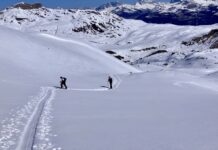
The week before departure, an enormous amount of snow fell in the Alps. What was supposed to be a transitional week between winter and spring changed completely. Not where winter meets spring, but rather: where spring meets winter again.
And that was exactly what defined the beauty of this trip with AlpAdventures.
From Geneva into the mountains
Suzanne traveled to Geneva, where Arno de Jong from Alp Adventures picked her up along with five other participants. A great group: a woman from Düsseldorf, four men from the Netherlands, including two brothers, a friend of theirs, and a friend of Arno.
Suzanne didn’t know anyone beforehand. Open to new encounters.
“You literally meet each other at the airport, and from that moment the adventure begins,” Suzanne says. “You don’t yet know what the group will be like, who you’ll meet. And that’s exactly what made it special.”
Arno organizes various mountain trips: hiking tours, snowshoeing trips, mountain bike tours, and other alpine adventures. Always with the same philosophy: being a guest in the mountains, truly entering them.
Not just taking a nice walk and returning to the hustle, but disconnecting from everyday life for a few days.
And that’s exactly what happened here.
Not a spring trip, but deep snow
In Suzanne’s mind, the trip initially looked different. More spring. More green. Maybe flowers, maybe open trails.
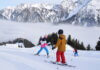
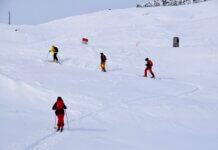
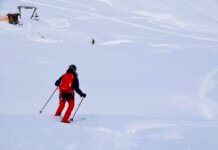
Instead, ski pants came along, extra thermal layers, and snowshoes quickly turned out not to be a luxury, but a necessity.
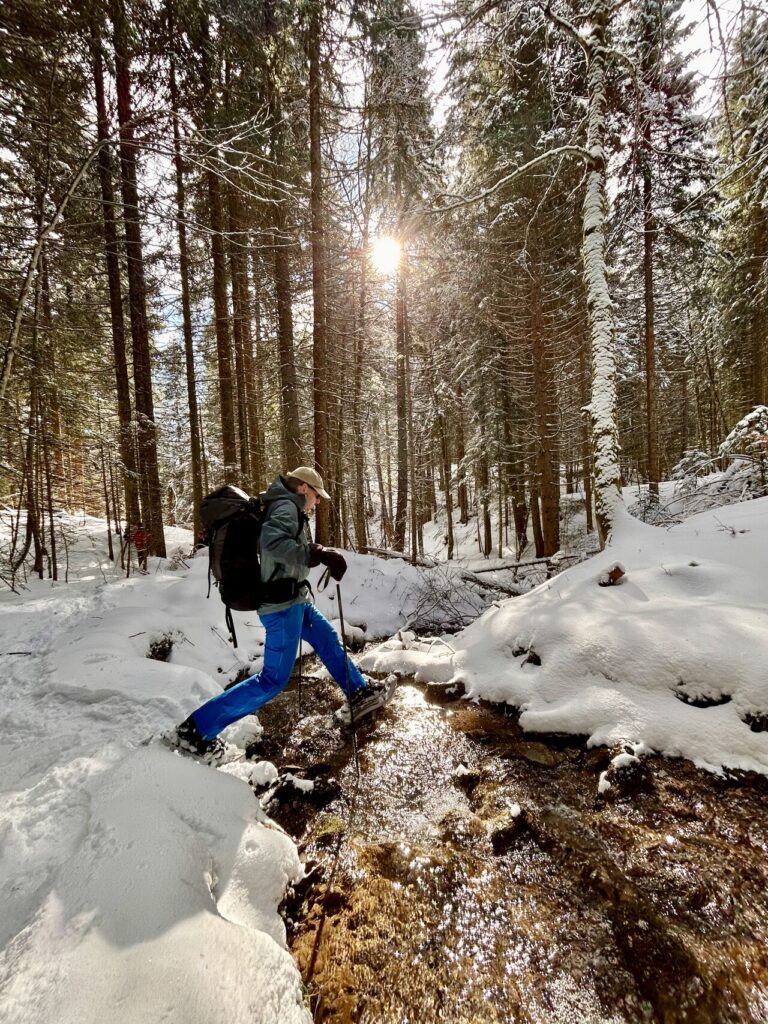
“My ski pants ended up being the only pants I wore for four days,” she laughs. “We really had to adapt. And actually, that was the first lesson of the trip: nature doesn’t adapt to you. You adapt to nature.”
That thought aligned perfectly with what Arno had shared beforehand:
nature is in control, we simply adapt.
It turned out not to be just a nice one-liner for a website, but the guiding thread of the days that followed.
A thousand vertical meters, snowshoes, and silence
The first day started in the region around Geneva, in the Haute-Savoie. Where exactly? Suzanne considers that less important in hindsight.
“The beauty is that I don’t even really know exactly where I was. We just went into the mountains. That made it feel a bit mysterious.”
From the start, it was serious.
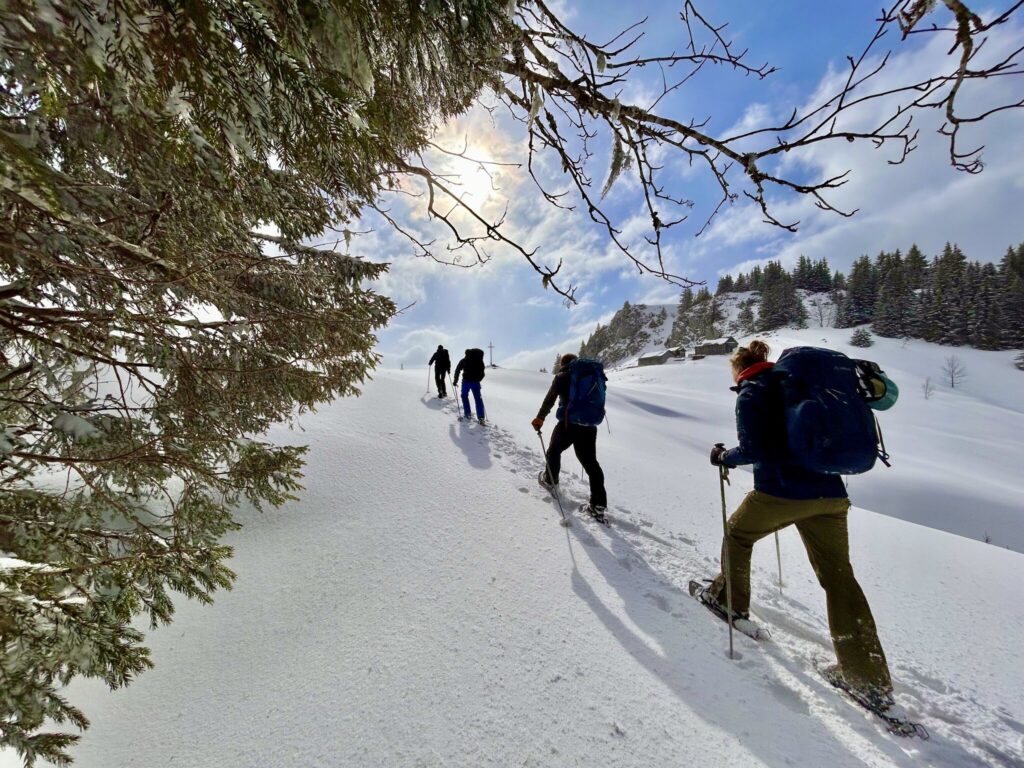
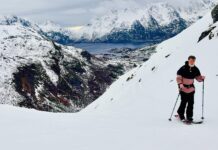
The group climbed about a thousand vertical meters that first day. Everyone carried their own backpack with supplies. Snowshoes were soon necessary, as you would sink deep into the fresh snow without them. The route wasn’t an obvious trail over quiet paths, but a constant search for the right line through the terrain.
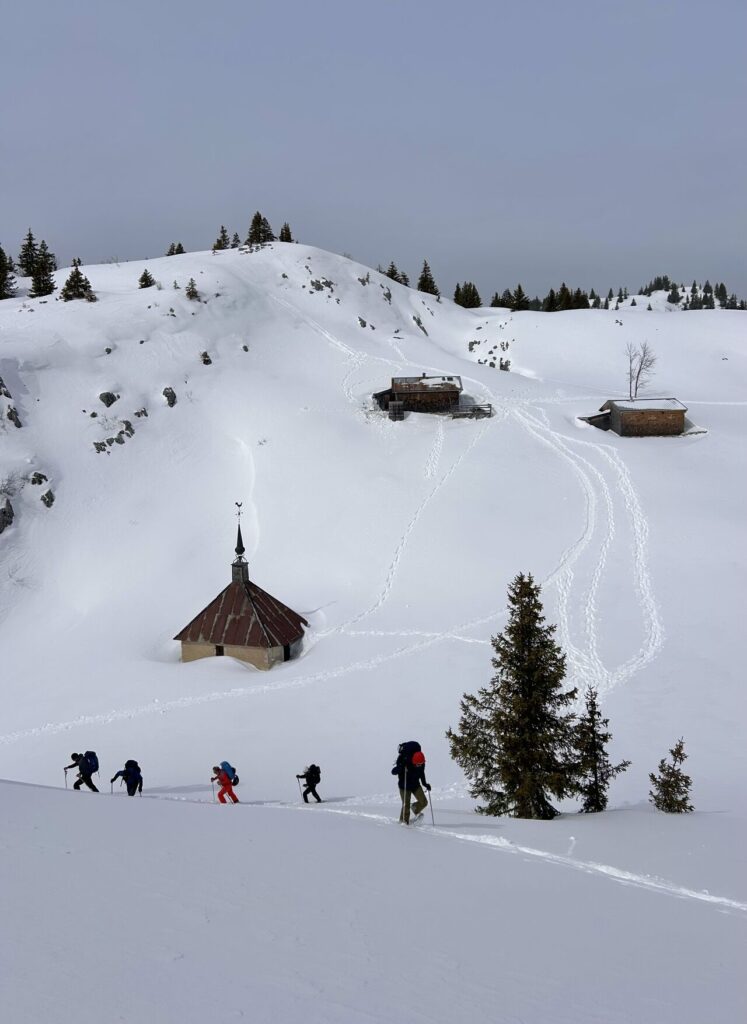
Sometimes zigzagging upward, sometimes straight up the slope, sometimes detouring because it had become too steep or too risky due to the snowfall.
And yet, it didn’t feel like pure hardship.
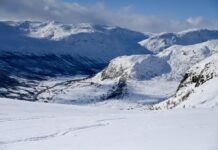
Suzanne uses the word magical when she looks back at the landscape. The thick layer of snow on the trees. The silence, made even deeper by the way snow absorbs every sound. The calm that comes with it.
“It feels like the mountains allow you in,” she says. “Like you’re truly welcome there for a moment. You’re a guest in nature.”
Arriving at a hut where nothing is taken for granted
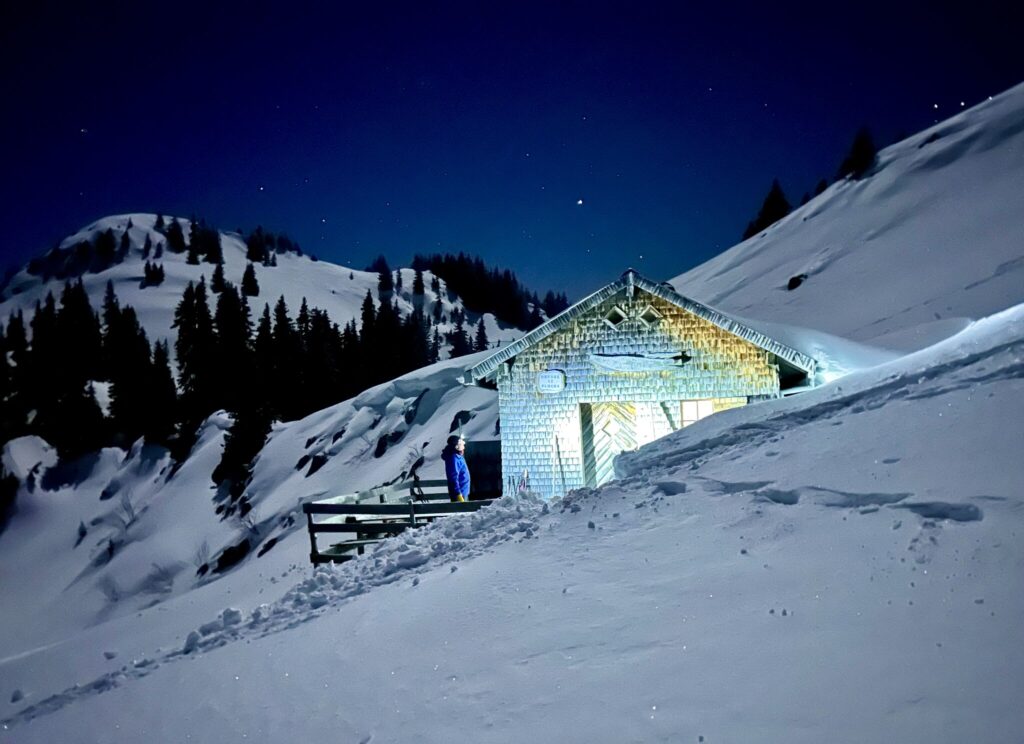
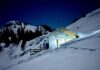
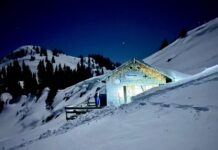
Only at the end of the afternoon did the group reach the first hut. Not a warm mountain lodge with service and comfort, but a simple place where life became very basic again.
Outside, it was around minus ten degrees. Inside the hut, still minus five.
The food Arno had stored there earlier was frozen. The water source was blocked. The “toilet” was buried under a thick layer of snow.
Back to basic suddenly became very real.
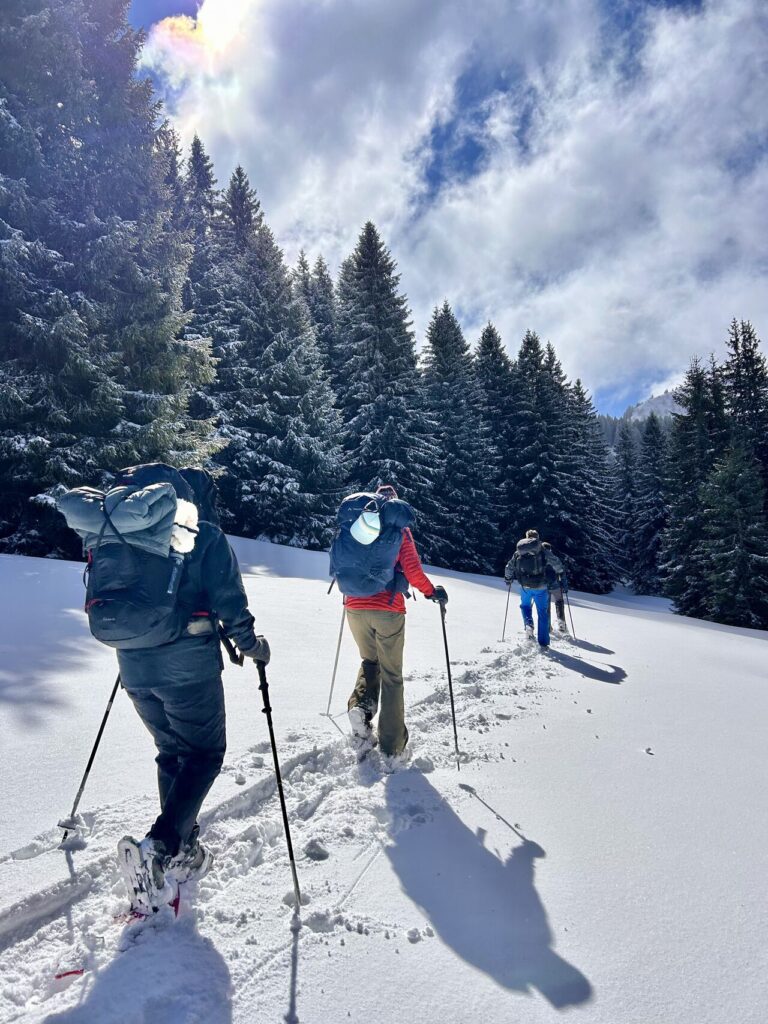
A hole had to be chopped in the ice to get water for cooking. A fire had to be started just to make the space livable. The toilet had to be dug out. Everyone naturally took on a task. One prepared the beds, another worked on the fire, someone else dug or carried supplies.
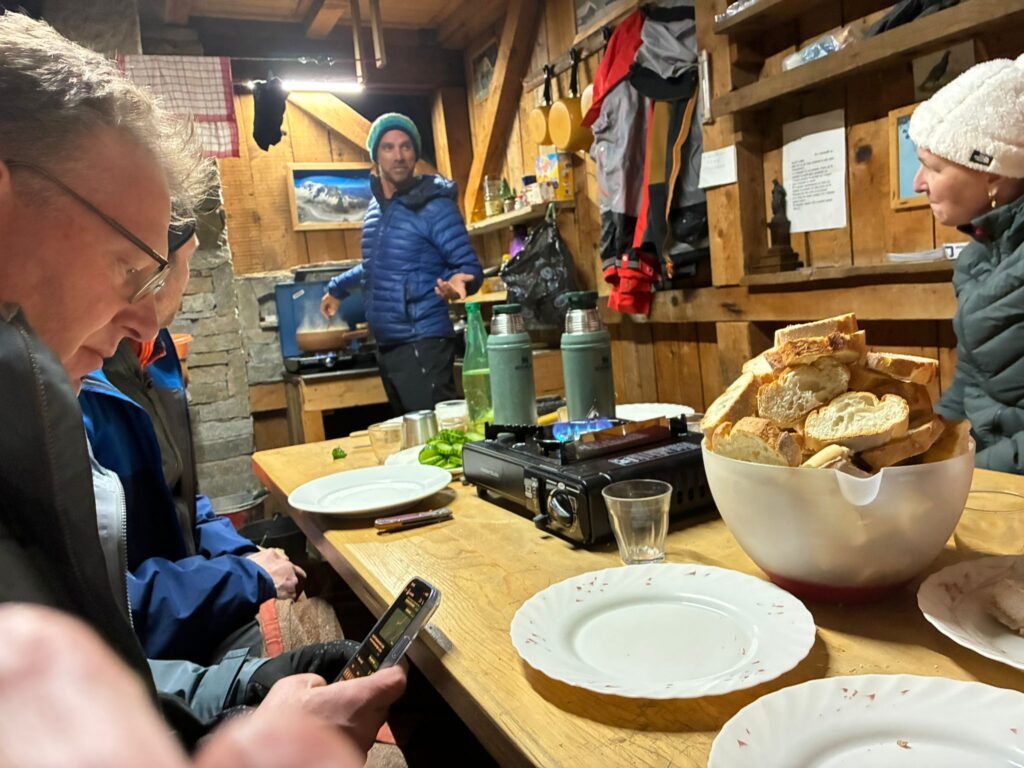
“You don’t just sit down to rest there first,” Suzanne says. “You immediately start working together. It happens naturally.”
Alone and still together
For Suzanne, there was another layer to this trip. She went alone. Without family, without a partner, without anyone she knew. That was intentional.
“I felt the need to not take anyone else into account for a while, except myself. Just to see who I am in a group like that, with only nature around me.”
At the same time, she found herself in a warm group of people with the same intention: a few days outdoors, out of the ‘thinkinh head’, closer to nature, and perhaps a bit closer to themselves.
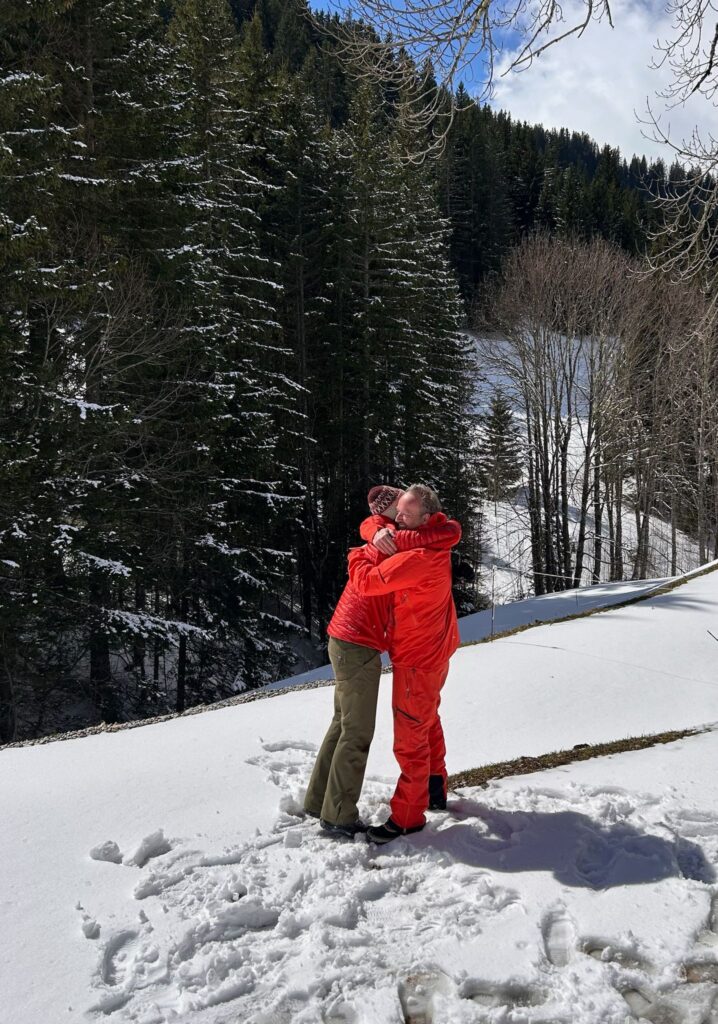
That created a feeling she later described as alone and still together.
Sometimes you walk in silence. You think your own thoughts. You feel your own body. You are alone on your path. But at the same time, there is the group. Not intrusive, not constantly talking, but clearly present.
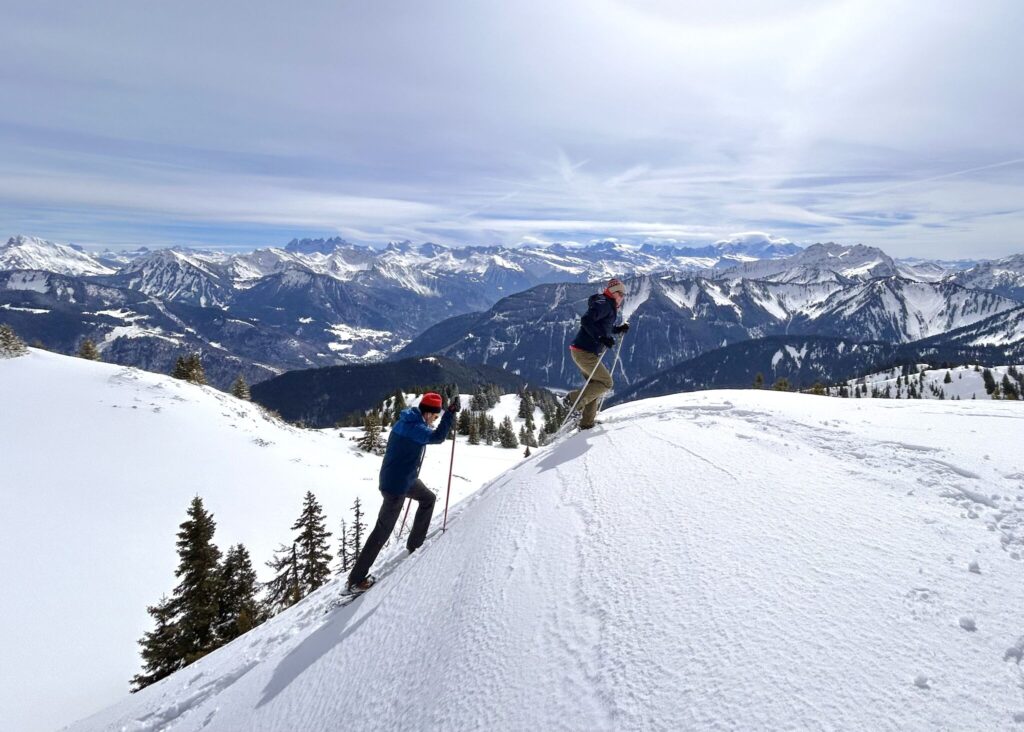
Sometimes you walk next to someone and a conversation starts. Sometimes you walk alone, and that is just as valuable.
Arno subtly facilitated that dynamic. No coaching sessions, no forced depth, but each day a quote and a question that lingered in your mind. What do you leave behind when you go into the mountains? What moves for you from winter to spring?
Not a heavy assignment. More like a small seed.
Precisely because there are almost no other stimuli, such a thought naturally grows. And later in the day, it leads to conversations. Open conversations, without judgment.
“That might have been the most beautiful part,” Suzanne says. “That sense of equality. In daily life, everyone has different roles and functions. In the mountains, that disappears.”
Tension, fun, and play as adults
The trip wasn’t only quiet and reflective. There was also a lot of laughter. The group had a great sense of humor.
Some descents were exciting, especially when there was ice beneath the snow. Suzanne sometimes found the steep downhill sections more challenging than the climbs. But that’s also where trust grew. She could express that she found it scary and felt immediately supported.
Arno helped both practically and mentally: where to place your feet, how to move, how to stay calm.
Being a child in the mountains
And there was room for playfulness. Sliding down natural snow slides on your backside. Laughing your way down. Being a child again in the mountains.
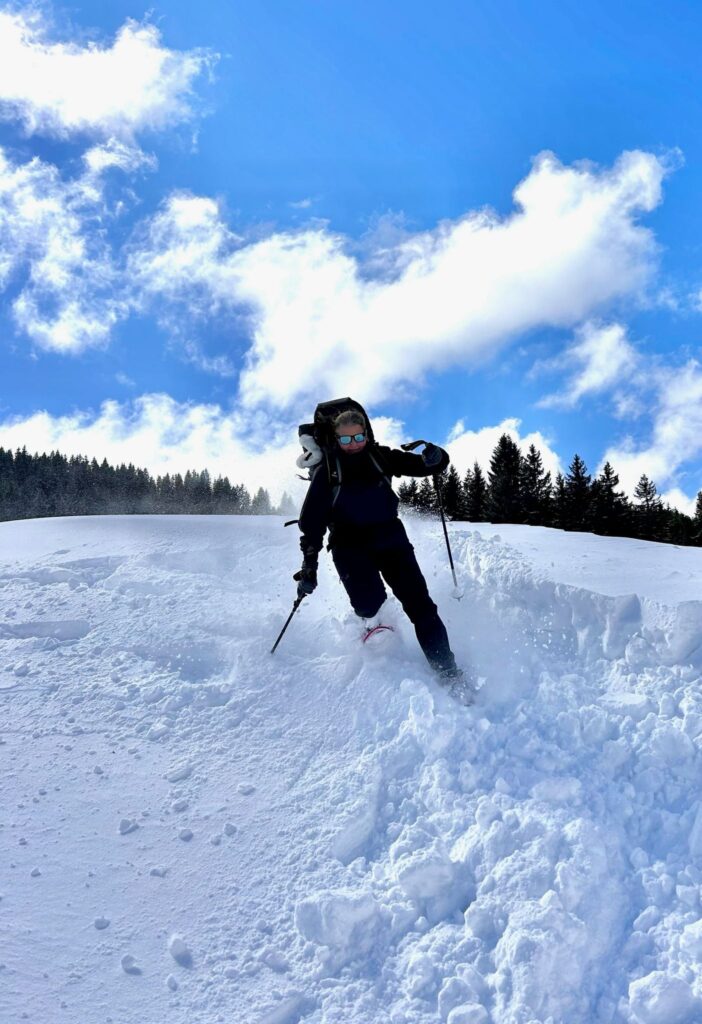
“I loved that,” Suzanne says. “You notice that you’ve become more careful in life. Because of age, responsibilities, maybe children. And here you’re challenged again to just play.”
A morning that brought everything together
Perhaps everything came together most beautifully on the second morning.
After meaningful conversations the evening before, Arno asked the group to walk alone for twenty minutes. No talking, no sharing. Just walking. Maybe thinking, maybe not.
It created space.
When the group came back together later, it felt different. As if everyone had a bit more clarity in their mind and was therefore more open to others. Suzanne had a meaningful conversation that morning with one of the other participants. Something in her story resonated with him. And because there was no shared history or judgment, the connection felt very pure.
Later, at the summit, everything aligned.
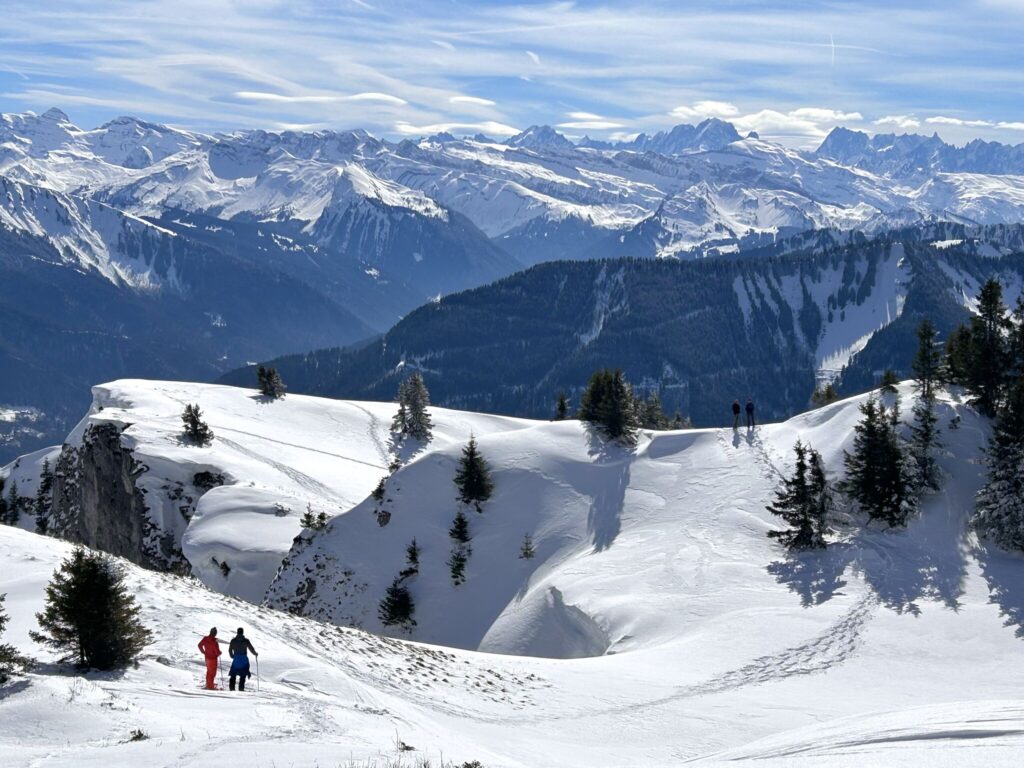
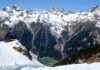
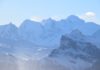
On one side lay Lake Geneva in the distance, with Lausanne and Montreux. On the other side stretched the beautiful Alps, with the ski area of Châtel and, somewhere beyond, Mont Blanc, partly hidden in the clouds.
That view didn’t just offer space, but perspective.
“You feel the connection with each other as people,” Suzanne says. “And at the same time, the freedom of those wide-open views. I think that only happens when you truly disconnect from the inhabited world like this.”
Why Arno makes the difference
A trip like this stands or falls with the guidance. Suzanne is clear about that: Arno made the difference.
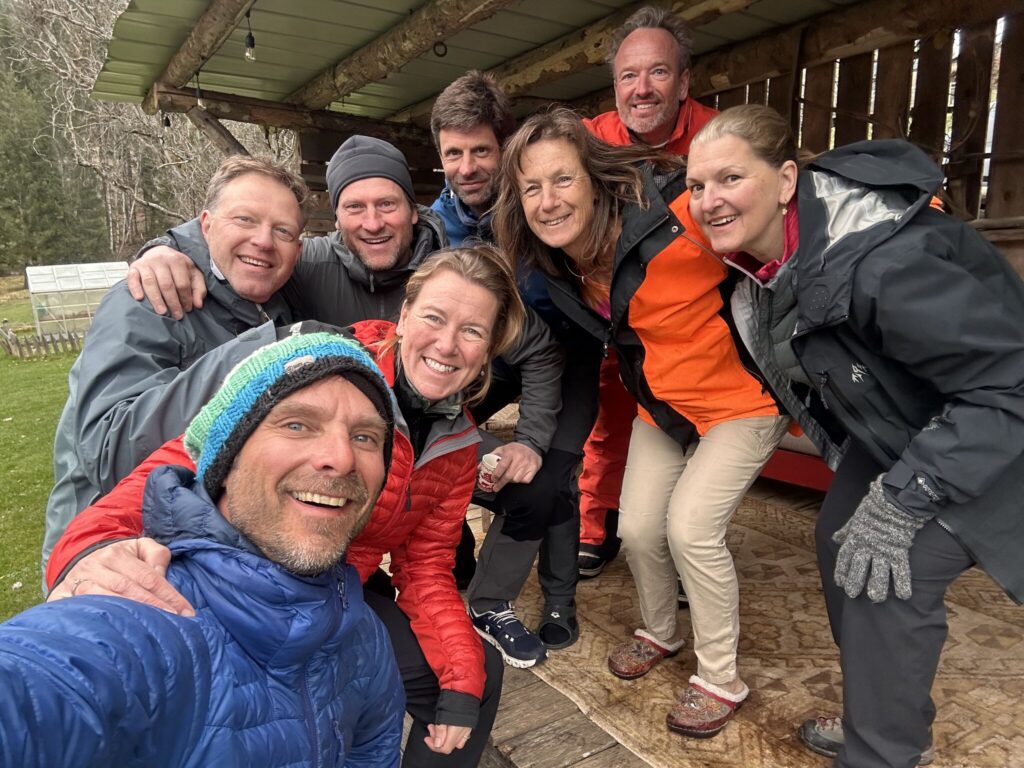
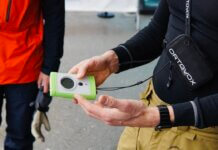
Not only because of his knowledge of route selection, snow conditions, nature, safety, and the mountains, but especially because of the way he carries a group. He radiates calm and confidence. Gives trust without over-directing. Is part of the group, yet keeps the overview.
“You quickly feel safe with him,” Suzanne says. “He has conviction, but also humility toward nature. And he senses very well what a group needs.”
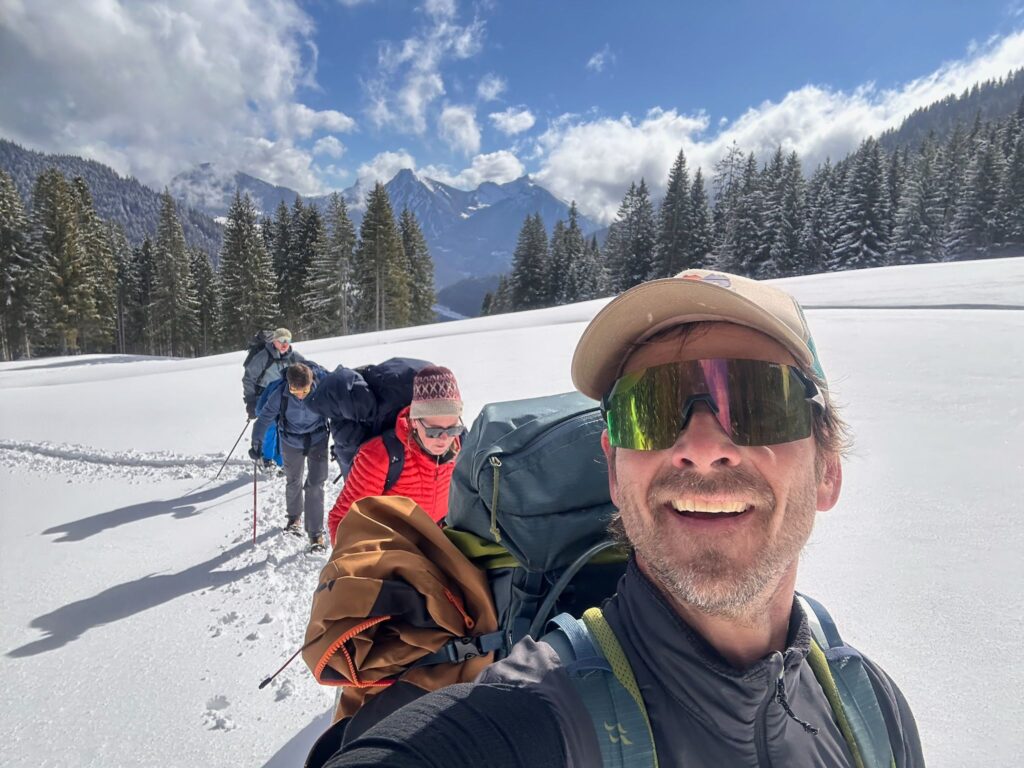
Along the way, Arno also shared insights about trees, climate, animal tracks in the snow, and the landscape. Spontaneously, never like a lesson. That made the trip not only physically and mentally rich, but also intellectually enriching.
Would she do it again?
There is not a second of doubt.
Absolutely.
In fact, Suzanne would gladly add another night, preferably again under the same simple, primitive conditions as in the first huts. Another evening with fire, snow, frozen food, a dug-out toilet, and a group that naturally works together.
Because in that discomfort lies something that has become rare in everyday life.
Not in having more, but in needing less.
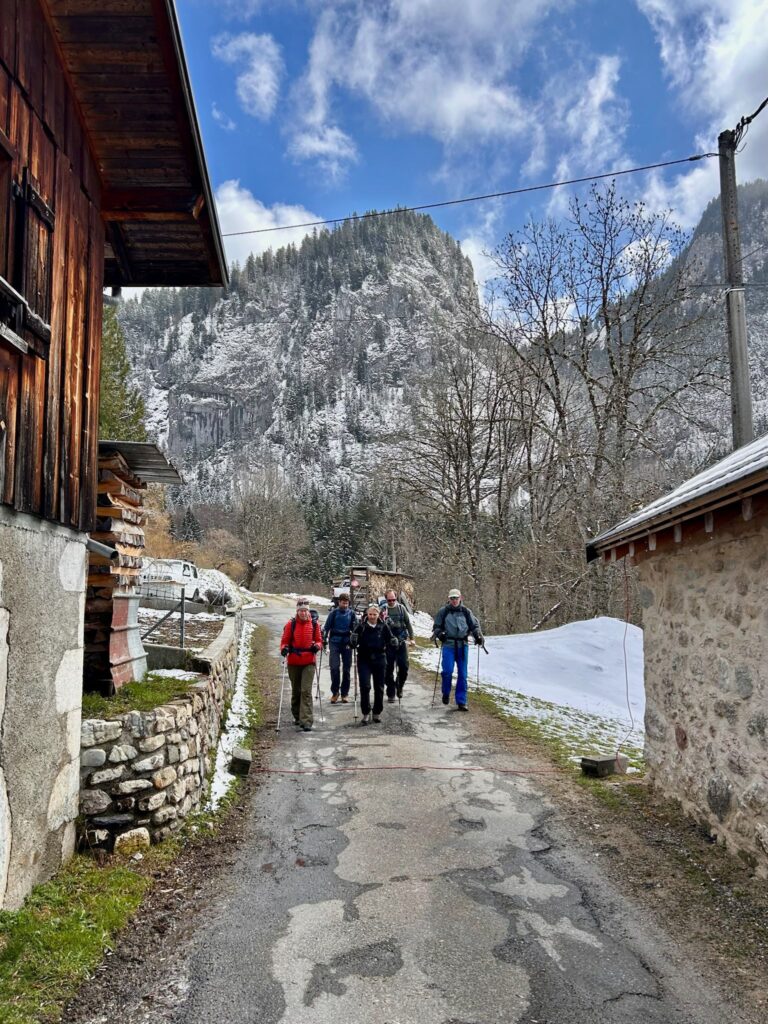
“For some people, this is a lack of comfort,” she says. “For me, it felt like enrichment.”